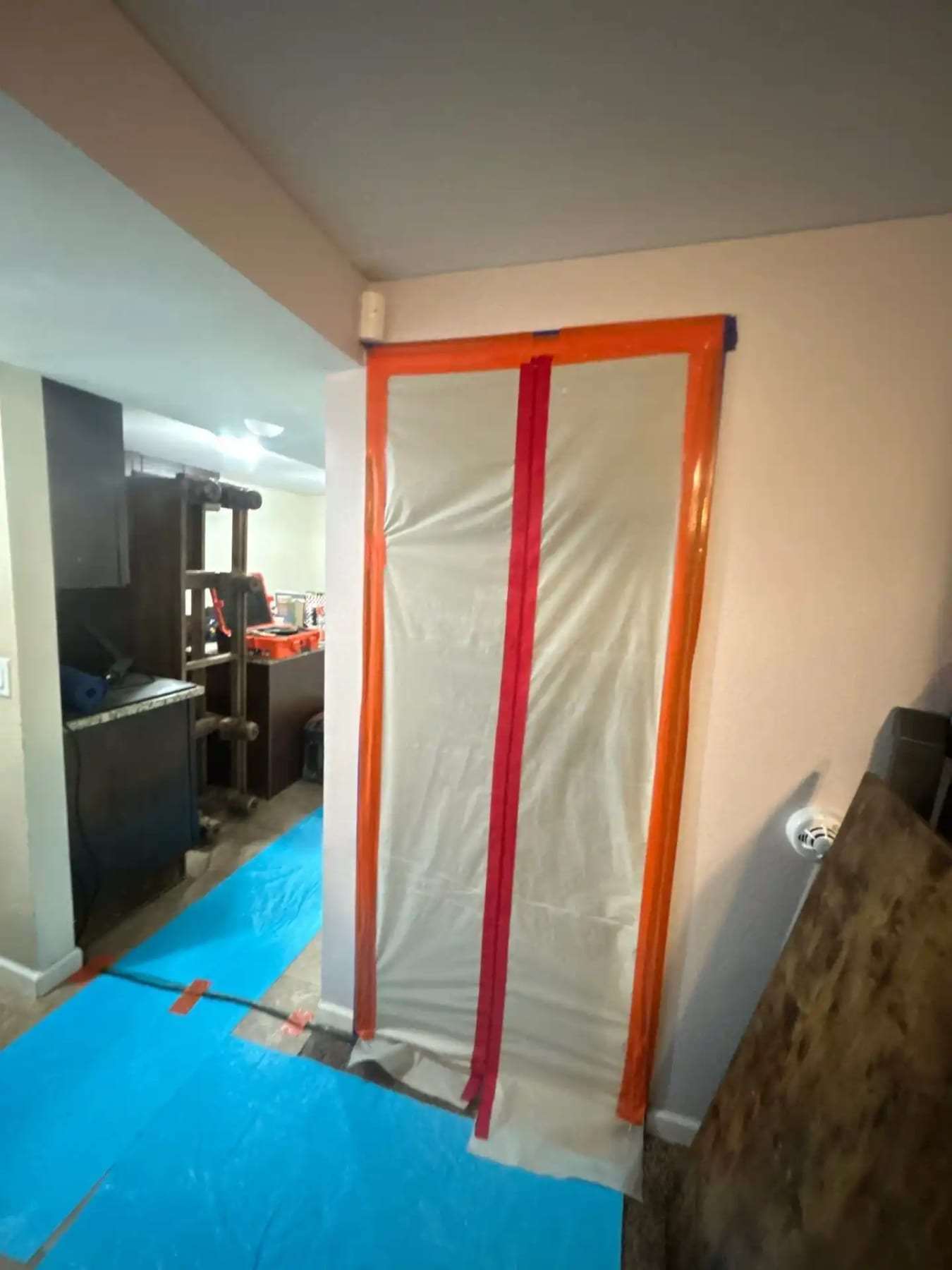
Taped containment doorway in a home with a protective runner on the floor. A general example of this kind of work, not a photo of a particular home, business or job.
What a home inspection usually does not cover
A standard home inspection looks at structure, roof, mechanical systems and visible defects. Many inspectors will note materials that look like they could contain asbestos, such as pipe wrap or attic vermiculite, but the general inspection usually does not include sampling. A note that says 'possible asbestos, recommend further evaluation' is the inspector telling you to hire someone else.
That further evaluation comes from a CDPHE-certified asbestos building inspector. Whether you do it before closing depends on your plans. If you intend to gut the kitchen, finish the basement or replace the heating system in your first year, knowing the results before you commit can affect your budget and your negotiation.
What you plan to do and what to sample
| Your plan | Materials worth sampling | Why |
|---|---|---|
| Live in it as is | Anything visibly damaged or crumbling | Damaged material can shed even without remodeling |
| Kitchen or bath remodel | Flooring layers, wall and ceiling finishes, joint compound | These are the surfaces demolition will remove |
| Finish the basement | Floor tile and mastic, pipe and duct insulation | Basements in older homes concentrate these materials |
| Replace heating | Boiler or furnace insulation, duct wrap, flue materials | System swaps disturb mechanical insulation |
| New windows or siding | Exterior siding, window glazing, caulk | Exterior work can disturb cement siding and older putty |
Questions for the seller and listing agent
- Has the home ever been tested for asbestos, and are there reports?
- Has any abatement been done, and is there clearance and disposal paperwork?
- Are there materials known to have been left in place, encapsulated or covered?
- Were any past remodels done with permits that would have required inspection?
- Is there vermiculite in the attic or walls?
Common questions
Should I walk away from a house because it might have asbestos?
Usually not. A large share of older metro Denver homes contain some suspect material, and most of it causes no trouble if left intact. The useful question is whether your plans will disturb it and what managing that would involve.
Can the seller's old test results be trusted?
They can be a helpful starting point. Check who performed the inspection, whether that person was certified at the time, which areas were included and whether the house has been remodeled since. Gaps may need a new inspection.
Does a newer remodel mean the asbestos is gone?
Not necessarily. New flooring is often laid over older layers, and new drywall can be hung over old plaster. Ask what was removed versus covered.
General information for the Denver area, not a quote or professional advice. In an emergency, call 911.