Walk into the basement of a brick bungalow in Highland, Baker or Park Hill and there is a fair chance you will see a cast-iron boiler, or the place where one stood, with pipes running along the joists toward radiators upstairs. On many of those pipes is a jacket of chalky insulation, sometimes covered in canvas or painted, with thicker molded pieces at the elbows. Asbestos was a common ingredient in that kind of pipe and boiler insulation for decades.
Pipe insulation is frequently friable. Where the canvas has torn or the jacket has been bumped by storage boxes, you may see crumbling white material or small piles of debris on the floor below. That condition matters more than the age of the house.
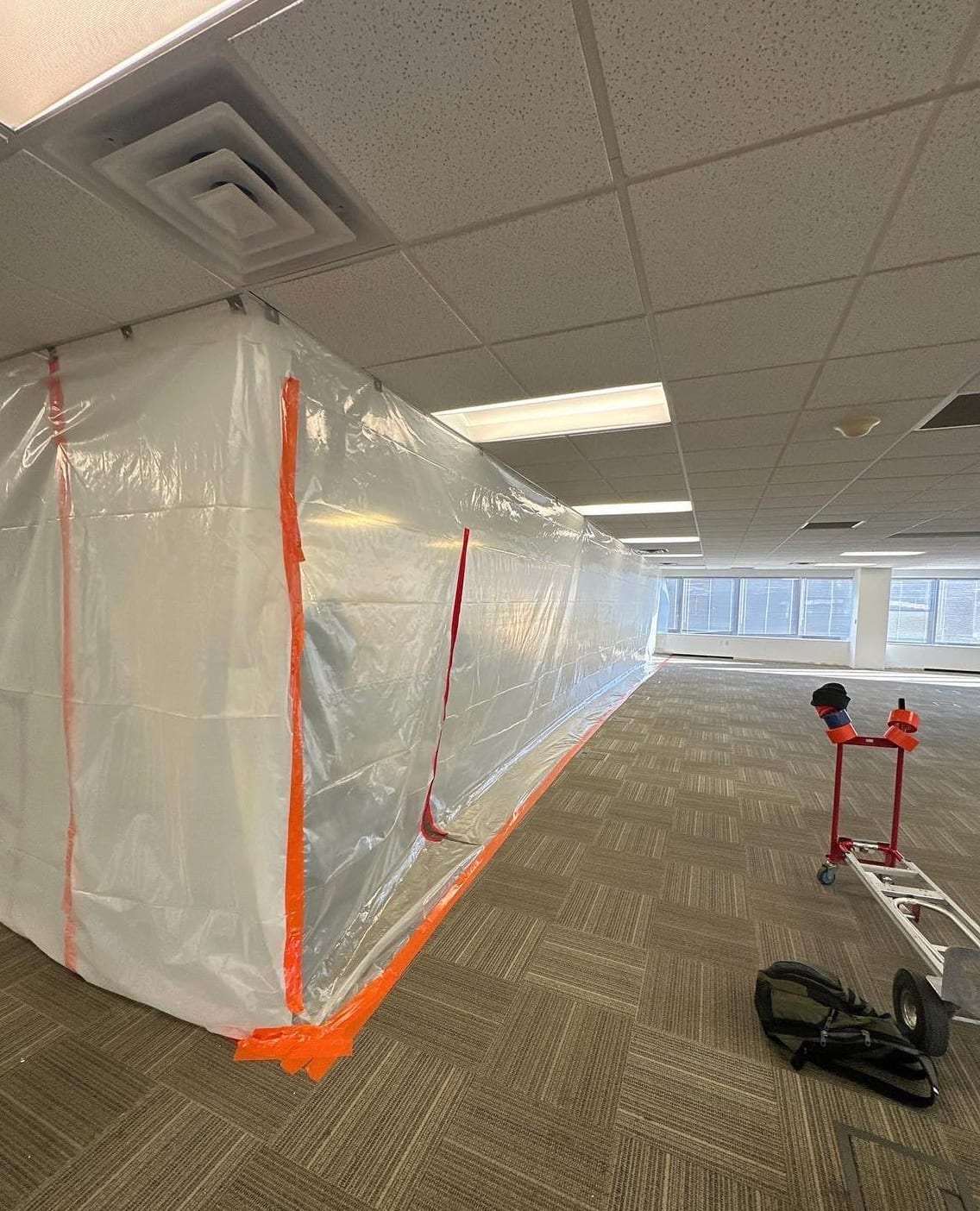
Office floor divided by a long plastic containment wall. A representative photo of the task, not a record of work at any particular property.
What the condition of the wrap suggests
Use this to decide how urgently to involve a certified inspector. It is not a substitute for sampling.
- IfThe wrap is intact, painted or jacketed, and nobody plans to work near itThenLeave it alone, keep storage away from it, and note its location for future contractors.
- IfThe jacket is torn or there is loose white debris under the pipesThenKeep people out of that part of the basement, avoid sweeping or vacuuming the debris, and arrange inspection soon.
- IfA plumber, HVAC installer or electrician needs to work on or near the pipesThenGet the insulation sampled before that work starts, and share the results with the tradesperson.
- IfThe boiler is being replaced or removedThenPlan for inspection of the boiler, its insulation and connected piping as part of the replacement scope.
- IfWater from a leak has soaked the insulationThenWet material can sag and fall. Stop the leak, keep the area closed, and have it evaluated before drying or cleanup disturbs it.
Ask before a boiler or piping job
- Has the pipe and boiler insulation been sampled, and can I see the lab report?
- Does your scope include the insulation on connected piping, not just the boiler jacket?
- Who will handle any asbestos-containing insulation, and what is their CDPHE certification?
- Will the new equipment be installed only after abatement and clearance are complete?
- What will be left in place, and how will it be labeled for future work?
Why it matters when the heat is converted
Converting from boiler heat to a forced-air furnace or heat pump is a common upgrade in older Denver homes. The old system often comes out in pieces, and a removal that seems like simple demolition can involve dozens of feet of insulated pipe. Building the asbestos inspection into the conversion plan, rather than discovering it mid-job, avoids a stopped project and a contaminated basement.
If the radiators are staying, the question is narrower: which pipes will be touched? An inspector can sample only what the work affects, though many owners choose to characterize the whole system once and keep the report.
General information for the Denver area, not a quote or professional advice. In an emergency, call 911.